An In-Depth Analysis of Query Optimization Techniques in Modern DBMS
Technology Stack
Project Overview
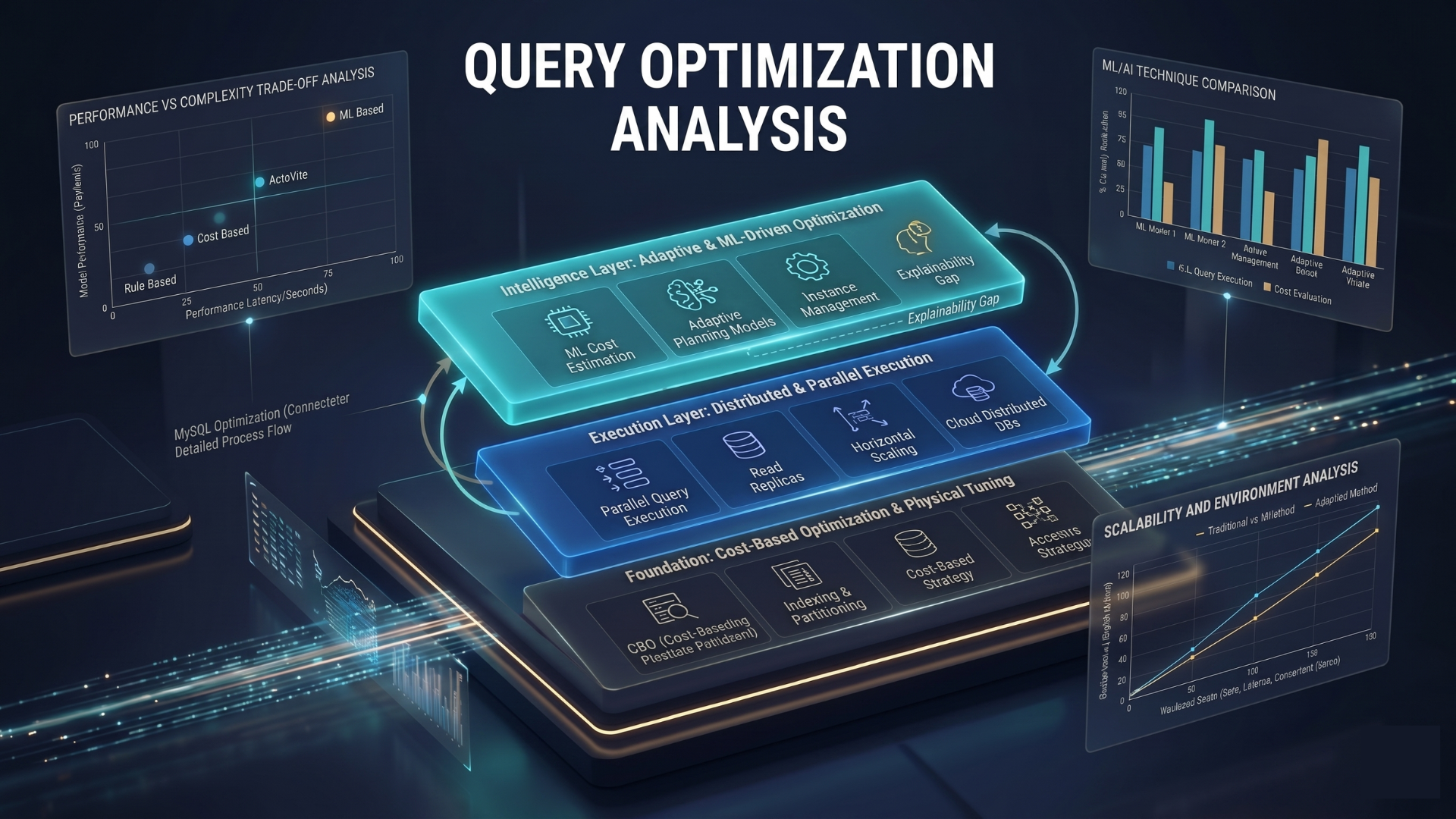
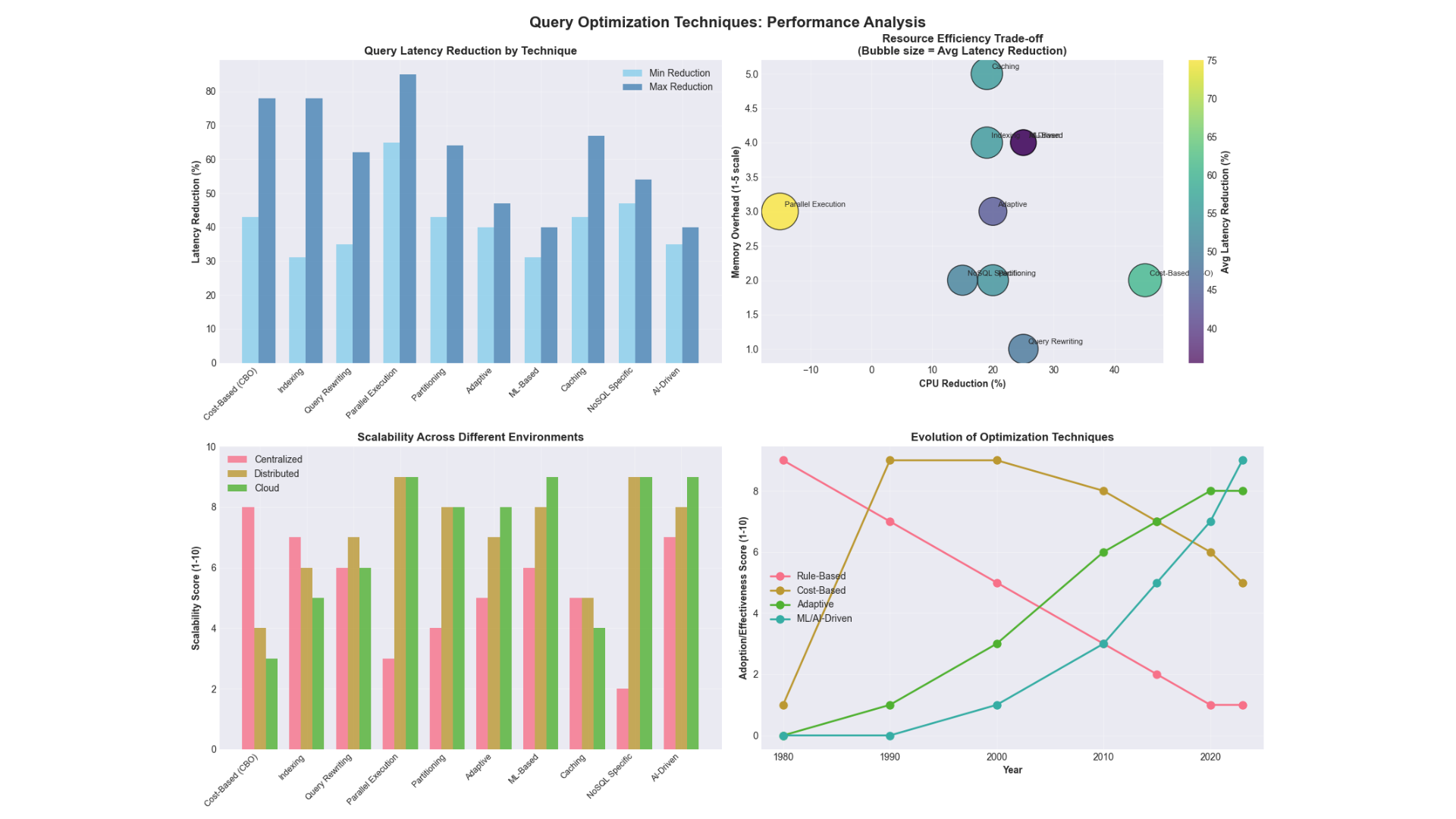
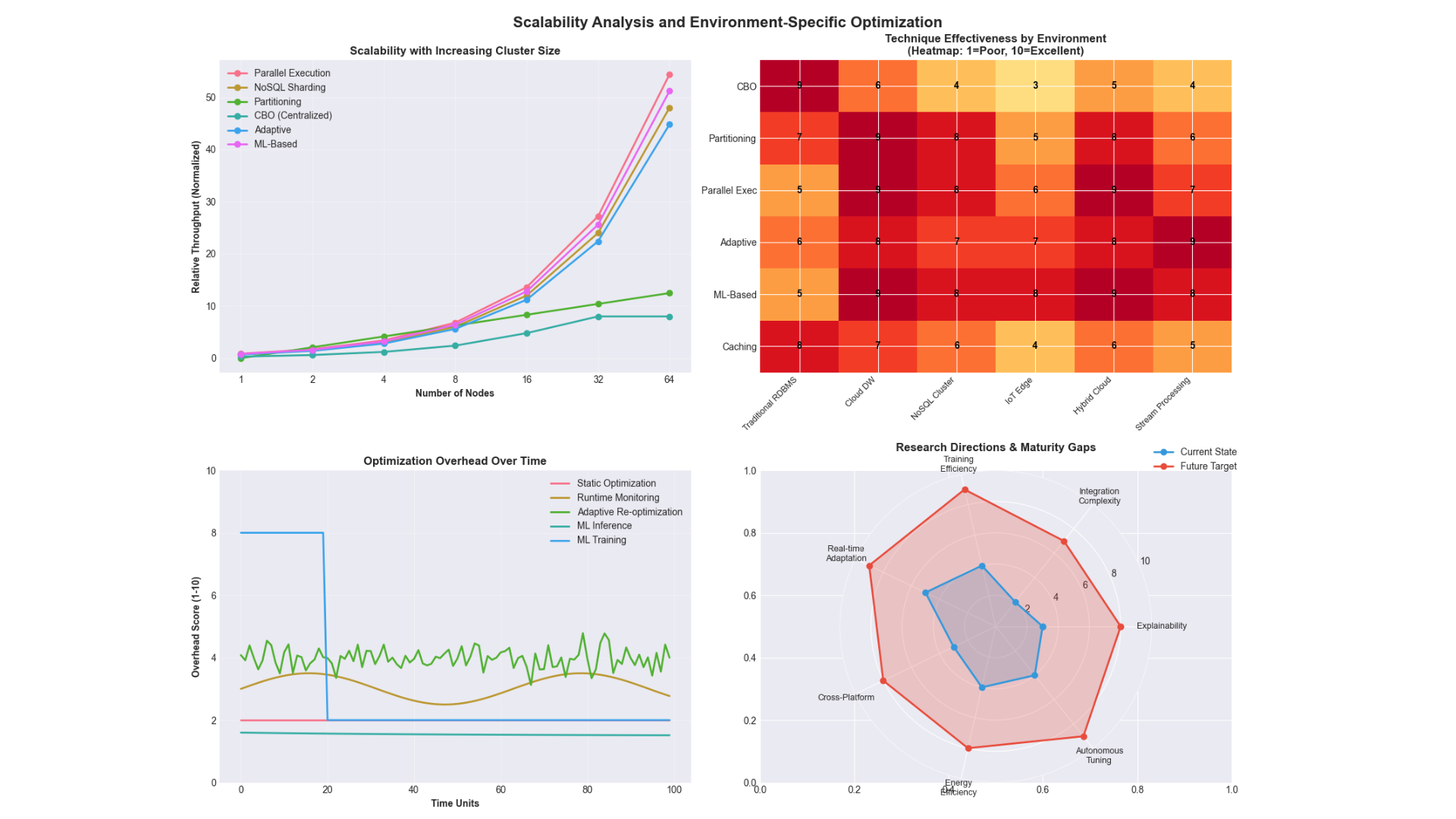
This project presents an in-depth comparative analysis of query optimization techniques in modern Database Management Systems (DBMS), including rule-based, cost-based, adaptive, and machine learning-based approaches. Using a systematic literature-driven methodology, the study evaluates these techniques across diverse architectures such as traditional RDBMS, distributed NewSQL, and cloud-native NoSQL systems on query latency, resource utilization, and scalability. Synthesized 30+ academic papers and provides Python-based visualization of key findings, demonstrating the trade-offs in query latency, overhead, and scalability, and proposing a three-layer optimization stack (CBO foundation + parallel execution + ML adaptation) used as reference in database course curriculum.
Features & Highlights
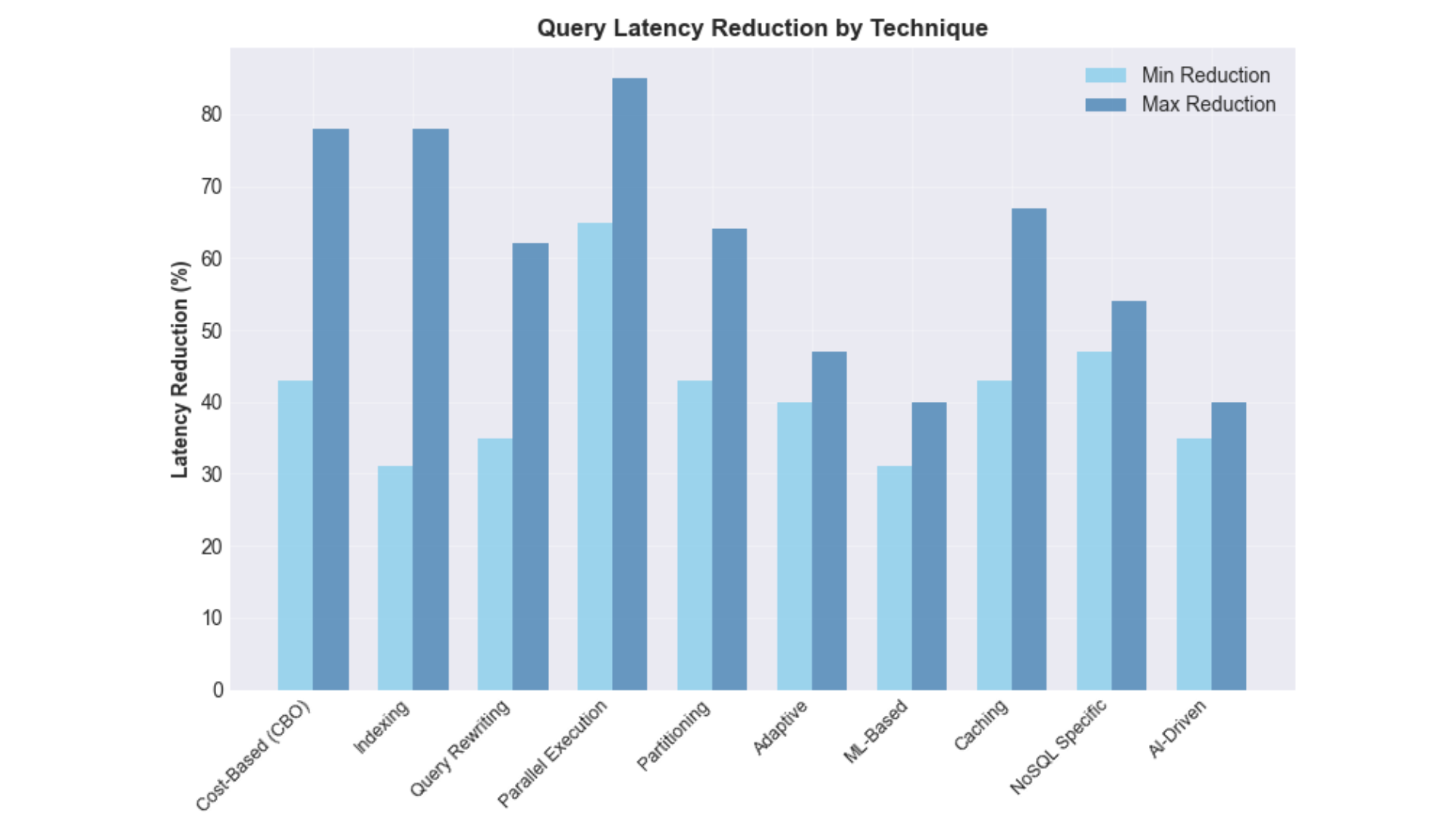
Cost-based optimization yields 78% latency reduction for stable workloads (RDBMS).
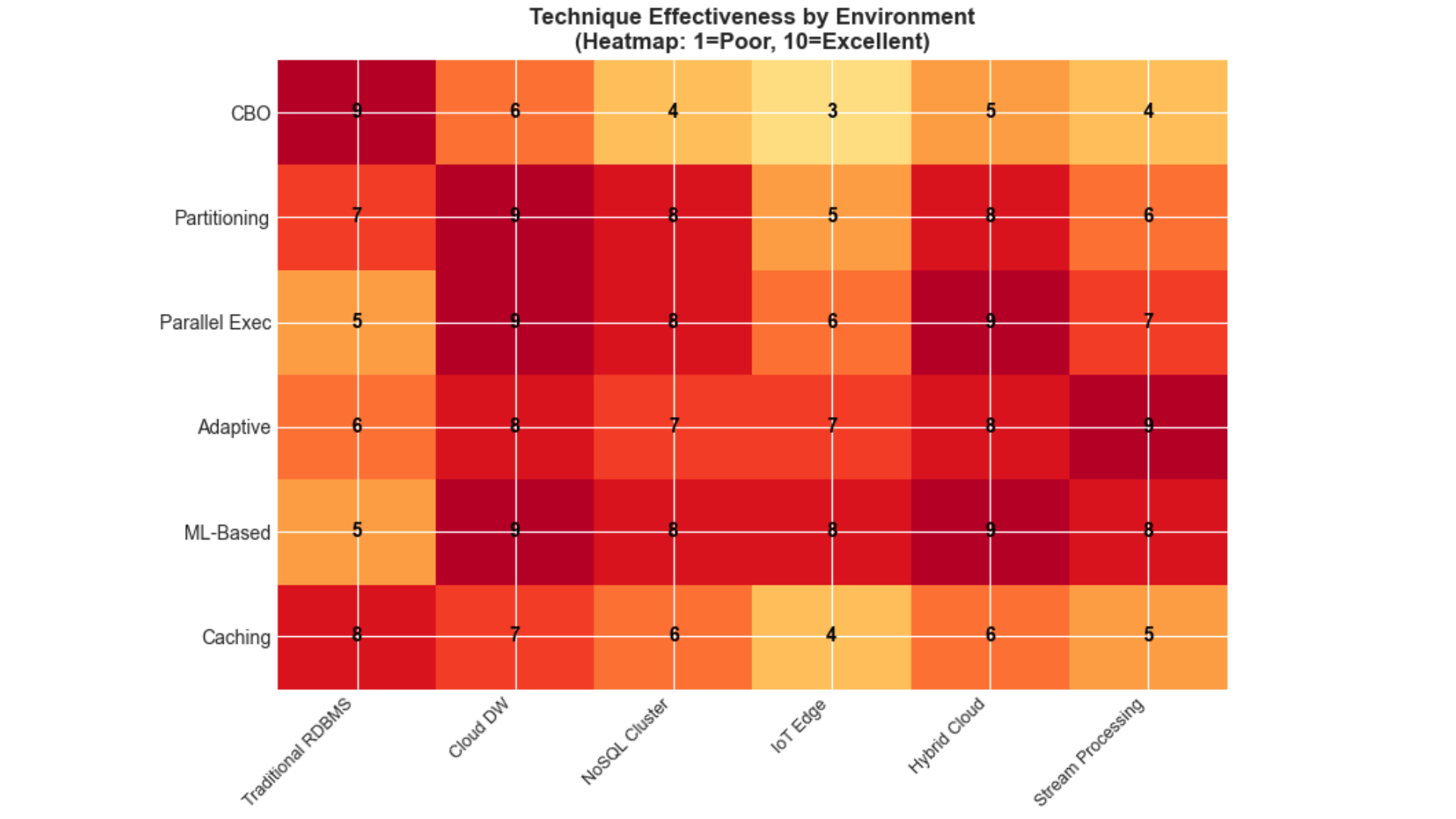
ML-based techniques: 30-40% latency gain but >85% overhead - trade-off heatmap.
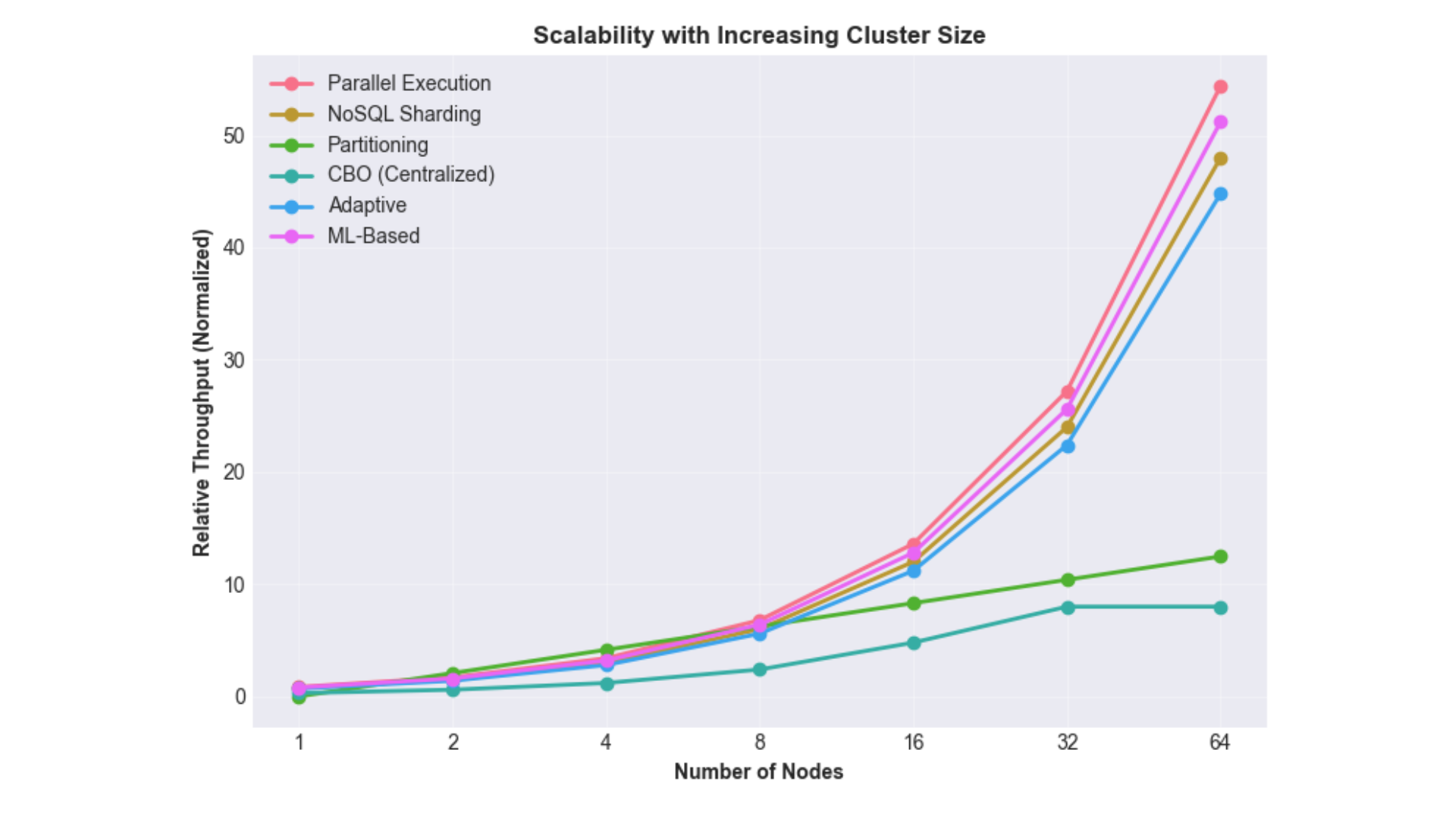
Scalability: Adaptive & distributed techniques achieve near-linear gains, rule-based plateaus.